


Are you struggling with dry hands this season but not sure which non-toxic hand cream is best? Learn more about toxins commonly found in lotions and body creams and find a list of some of my favorite non-toxic hand creams you can choose from!
Living in Las Vegas definitely has its perks: year-round sunshine, stunning desert landscapes, nice hair (due to low humidity), and so many things to see and do. But as someone who has always struggled with dry skin to some degree, moving to Las Vegas really took the problem to a whole new level. Once winter hits, the back of my hands may as well just be sandpaper if I don’t use a good hand cream.
Back when I was in my early 20’s, I remember really loving a hand cream from Victoria’s Secret. It was thick, creamy, and left my hands feeling super soft and velvety all day. However, these days I wouldn’t be able to tolerate the strong scent of that hand cream. But most importantly, the ingredients of that hand cream were most definitely not non-toxic!
My Search for the Best Non-toxic Hand Cream
If you can relate to having dry hands, you know how crucial a good hand cream can be! One winter, I went on a mission to find the best non-toxic hand cream that hydrates my skin without the use of harmful chemicals. I’m still trying out various creams to find the one I like best. But I wanted to share what I’ve found so far that both works great and is also non-toxic and safe to use.

But first, let’s talk a little about the toxins commonly found in lotions, hand creams, and body creams, and why this even matters!
Why Choosing a Non-Toxic Hand Cream Even Matters
1. Exposure to Toxic Ingredients with Health Risks
Many conventional hand creams contain toxic ingredients such as parabens, phthalates, and petroleum-derived ingredients. These chemicals have been associated with issues ranging from skin irritation and allergic reactions to potential hormone disruption and other long-term health concerns (Wang et al., 2024; Mariana et al., 2023).
The good news is that there are brands out there that use truly natural and skin-nourishing ingredients for their skin creams. These non-toxic creams actually feed your skin while providing the same (or even better) hydration without the harmful cocktail of chemicals.
2. Potential Skin Absorption
Your skin is your body’s largest organ, and it absorbs more than you might think! Research has confirmed that the skin can absorb certain chemicals applied topically. The exact absorption rates for each product can vary based on factors like the molecular size of ingredients, the area of the body that products are applied, and how long the product stays on the skin.

This is where hand creams become particularly important! Unlike face wash or shampoo that you rinse off almost immediately, hand cream sits on your skin for hours. Sometimes all day or even overnight! Because hand creams sit on your skin for extended periods (sometimes all day or overnight), there’s increased opportunity for ingredient absorption compared to products you rinse off. This becomes even more of an issue when you consider the fact that many people apply hand cream multiple times throughout the day, resulting in repeated exposure.
Next, let’s look deeper into the most common toxic ingredients found in conventional hand creams.
7 Ingredients to Avoid in Hand Creams
When searching for a good non-toxic hand cream, it’s always best to refer to the ingredients list. Don’t assume that because the product says “all-natural” or “clean” that it is non-toxic (see my article about greenwashing).

Although this isn’t a comprehensive list of concerning ingredients, these are some of the most commonly used toxic offenders to watch out for in hand creams.
1. Parabens
If you’re not new to looking at skincare ingredients, you may have heard of parabens before. Parabens are used as synthetic preservatives to prevent bacterial and mold growth in cosmetics and personal care products such as hand creams. While they’re effective at extending shelf life, research has linked parabens to potential hormone disruption (Wang et al., 2024; Tang & Du, 2024).
Another thing I want you to keep in mind about hand creams is that we typically apply them to dry skin which can mean the skin is possibly cracked and damaged. Why is this an important detail? Research using pig ear skin (which closely mimics human skin) found that parabens penetrate damaged or compromised skin barriers more easily than healthy skin. Again, this is particularly relevant if you have dry, cracked hands, as the parabens in your hand cream may absorb more readily when your skin barrier is already damaged (Pažoureková et al., 2013).
When on the look-out for parabens, look for the following on ingredient labels:
- Butylparaben
- Isobutylparaben
- Propylparaben
- Ethylparaben
- Methylparaben
- Bethylparaben (less studied, presumed lower concern based on alkyl chain length)
But also be aware that parabens can hide behind catch-all ingredient items such as “fragrance” or “parfum” (see the Synthetic Fragrances or Parfum section below for more details about this).

Pure Insight: Research suggests that parabens with longer alkyl side chains (and thus with more complex molecular structures) tend to have stronger estrogenic effects (J. Kim et al., 2023b). These stronger estrogenic effects mean they may be more disruptive to hormones. Because of this, I ordered the above list of parabens based on alkyl side chain length (from longest to shortest).
A Note About Japanese Honeysuckle (Lonicera Japonica Honeysuckle Flower)
You might see Japanese Honeysuckle listed in “clean” products as a natural preservative alternative to parabens. This ingredient is a little controversial, and I’m going to take a minute to explain why. Japanese Honeysuckles (Lonicera Japonica Honeysuckle Flower) contains para-hydroxybenzoic acid (PHBA) and is thus structurally similar to synthetic parabens. In other words, Japanese Honeysuckle is made from PHBA, just like synthetic parabens. While PHBA and parabens share molecular similarities (Ross, 2019), I have to note that there are currently no strong scientific studies specifically recommending against honeysuckle extract use due to endocrine disruption risks. The concern is largely theoretical and is based on molecular structure rather than confirmed safety studies of honeysuckle extract in topical products.
That being said, if you’re choosing products and specifically want to avoid parabens, you may want to apply the same careful consideration to products containing Japanese Honeysuckle extract or other PHBA-containing plants like mulberry, licorice root, and sophora japonica out of caution. As of now, this is obviously an area where more research is needed. But ultimately the choice comes down to your personal comfort level with ingredients that share structural similarities to known endocrine disruptors. Personally, I prefer to steer clear if there are other clearly safe alternatives out there (which there are!).
2. Phthalates
Phthalates are plasticizing chemicals used to make fragrances last longer and help products spread more smoothly. Because of these properties, they are used in many cosmetics and personal care products (Aldegunde-Louzao et al., 2024b), including lotions and hand creams.
Studies have consistently linked phthalates to hormone disruption, particularly affecting reproductive health (Land et al., 2024; Hlisníková et al., 2020; Grindler et al., 2018).
3. Synthetic Fragrances or Parfum
Ingredients like “fragrance” and “parfum” are kind of an ambiguous catch-all. Since companies are not required to disclose what’s in their “fragrance” formulations due to federally protected “trade secrets” laws, there could be a whole host of undisclosed toxic chemicals behind that single-word ingredient such as:
- Parabens
- Phthalates
- Allergens
- Irritants that can trigger sensitive skin reactions
- and more
Does this mean that a product that has “fragrance” listed as one of its ingredients is toxic? Not necessarily. But the odds are high enough for me to be wary when I see the ingredient listed anywhere (Phthalates in Cosmetics, 2022; Pastor-Nieto & Gatica-Ortega, 2021)!
My suggestion? Look for words like “fragrance” or “parfum” in the ingredients. If you see either of those, it’s probably best to assume they aren’t hiding anything good behind that ingredient item. For true transparency, seek out products that either list specific botanical extracts and essential oils or are fragrance-free altogether.
A Note About Fragrances and Parabens
While parabens are typically listed clearly on ingredient labels (methylparaben, propylparaben, etc.) as I mentioned above, they can also hide in products through the ingredient “fragrance” or “parfum”. So even if a product appears paraben-free based on the main ingredient list, if it contains “fragrance” or “parfum,” you can’t be certain it is truly paraben-free. Non-toxic brands that are transparent will either use botanical extracts and essential oils (listing each one) or go completely fragrance-free.
4. Petrolatum (Petroleum Jelly)
Petrolatum that is truly refined and cosmetic-grade shouldn’t actually be a safety issue. However, poorly refined petrolatum may contain polycyclic aromatic hydrocarbons (PAHs), which are potential carcinogens. Personally, I also just don’t prefer to use it since it is petroleum-derived after-all, even if purified.
While cosmetic-grade versions should technically be fully refined and safe to use, there’s no way to verify the source quality from reading a label alone (Kamrani et al., 2023; Petrolatum, Petroleum Jelly, 2022). So I personally prefer to steer clear, especially since there are options that don’t use this ingredient at all (and like I said, it’s also petroleum-based).
You of course also have the option of contacting the brand directly and asking them for proof of high-grade formulations. But I get that not everyone has time for that!
If you’re wanting to avoid this ingredient, watch for these names:
- Mineral oil
- Petroleum jelly
- Petrolatum
- Paraffin
- Liquid paraffin
5. Formaldehyde Releasers
Formaldehyde releasers are preservatives designed to slowly release formaldehyde over time to prevent bacterial growth. While preventing bacterial growth is obviously very important, the problem is that formaldehyde is a known carcinogen .
Most of the research out there has focused on the effects of inhaling formaldehydes, but more needs to be done looking into the impacts of skin contact and absorption. That being said, formaldehyde is already known to cause allergic reactions and skin irritation in addition to confirmed respiratory issues.
What makes these ingredients even more concerning is that they continue releasing formaldehyde as long as they sits on your shelf and your skin (Dodson et al., 2025; Tang & Du, 2024; Formaldehyde and Formaldehyde-Releasing Preservatives, 2022).
When trying to spot formaldehyde-releasing agents in products, look for:
- DMDM hydantoin (1,3-dimethylol-5,5-dimethylhydantoin)
- Imidazolidinyl urea
- Diazolidinyl urea
- Quaternium-15
- 3-dioxane
- 2-bromo-2-nitropropane-1,3-Diol (Bronopol)
- 5-brom-5-nitro-1
- Sodium hydroxymethyl glycinate
- Paraformaldehyde
- Methanol
- Methenamine
Make sure none of the above appears on your ingredient label. While formaldehyde itself must be listed if it’s added directly, these releasing agents can be used without any actual direct mention of formaldehyde, making them easy to miss if you don’t know what to look for (Malinauskiene et al., 2015)!
6. Polyethylene glycols (PEGs)
You’ll find PEGs in so many hand creams because they solve multiple formulation challenges at once. They work as thickeners, help oil and water blend together, and create that smooth, fast-absorbing texture. You’ll see them listed as “PEG” followed by a number (like PEG-20 or PEG-60). And they’re everywhere in personal care products because they’re cheap and versatile.
The problem isn’t necessarily the PEGs themselves, but what comes with them. During manufacturing, PEGs can be contaminated with ethylene oxide and 1,4-dioxane, which are both carcinogenic. These contaminants aren’t listed on labels because they’re not intentionally added ingredients; they’re byproducts of the manufacturing process. Additionally, research shows that PEGs can cause hypersensitivity reactions in some people.
While some companies vacuum-strip their PEGs to remove these contaminants, this information rarely makes it to product labels. And even then, vacuum-stripping still most likely won’t remove 100% of contaminants. At the end of the day, many clean beauty certifications simply ban PEGs altogether rather than verify purification processes (V. Patel & Gaurav, 2025; Zhou, 2019; Jang et al., 2015). Given how many PEG-free alternatives exist that provide the same smooth, absorbent feel, it’s worth choosing products without them, in my personal opinion.
7. Butylatedhydroxy Anisole (BHA) & Butylated Hydroxytoluene (BHT)
If you’ve ever wondered why your standard hand cream doesn’t go rancid after sitting in your bathroom for months or even years, you can often thank BHA and BHT. These synthetic antioxidants are preservatives that keep products with natural oils and butters from spoiling. And while regulatory bodies say they’re safe in the tiny amounts used in cosmetics (typically below 0.2% for BHA and 0.8% for BHT), there’s a little more to consider as you make your own choices.
Here is what gives me some pause. BHA has been classified as a possible human carcinogen by the International Agency for Research on Cancer, and it is also listed as a probable or known carcinogen on the American Cancer Society website. Both ingredients have also shown potential hormone disruption in animal studies at high doses, with BHA raising more red flags than BHT. Now, before you panic, this classification is based mostly on animals eating large amounts of BHA, not applying small amounts to the skin. Another thing to note is that for some people, these preservatives can trigger allergic reactions or skin sensitivity, though this doesn’t appear to be super common (Known and Probable Human Carcinogens, n.d.).
The risk from these ingredients in hand cream is considered low by regulatory standards, and that’s reassuring. But with natural alternatives offering the same preservation benefits, it’s worth considering whether you want to avoid the potential question marks altogether.
4 Things to Look for If You’re Trying to Find Non-toxic Hand Creams

The best non-toxic hand creams share a few key characteristics. When scanning labels, focus on these four key elements.
1. Nourishing Oils, Butters & Fats (Natural Moisturizers)
When studying an ingredient label, look for ingredients like shea butter, cocoa butter, mango butter, coconut oil, almond oil, jojoba oil, olive oil, grass-fed tallow, lanolin, emu oil, or aloe vera. These ingredients are a non-toxic way to provide deep hydration and help repair dry skin.
2. Essential Oils/Botanical Extracts or No fragrance
Choose hand creams scented with essential oils or botanical extracts instead of synthetic fragrances. I personally even try to avoid “safe synthetics.”
3. Safe Preservatives
Preservatives keep your hand cream fresh without exposing you to harmful chemicals. Look for options like tocopherol (vitamin E) and sodium benzoate. Note that oil-based formulas without water may only need vitamin E for preservation (like my favorites listed at the end of this article!).
4. Certifications or transparent quality sourcing
Certifications help ensure higher safety and quality standards. Look for USDA Organic/organic ingredients, EWG Verified, Made Safe, or Regenerative certifications. Keep in mind that not all clean brands have official certifications. Many provide solid transparency through other means, such as sharing their regenerative farming methods or sourcing practices.
And of course, if possible, make sure they don’t have any of the ingredients on the big offenders list above!
Best Non-toxic Hand Creams: My Top 3 Picks
As an affiliate and Amazon Associate, I may earn a small commission if you choose to make any purchases using links in this article (at no extra cost to you!). I have high standards for products and only share ones I’ve researched, genuinely trust, and would personally use and recommend to friends and family.
Now that you know both what to look for and what to avoid, let me share my favorite non-toxic hand creams!
Though my favorites that I use aren’t necessarily marketed exclusively as the typical hand creams you find in tubes at the store, these work beautifully when it comes to keeping my hands smooth and hydrated without the toxins.
As of today, my top favorite picks for non-toxic hand creams are:
- Evanhealy Body Butters
- Primally Pure Body Butters
- Dr. Bronner’s Unscented Organic Magic Balm for Hands, Face & Body
All of these options are beautifully simple. And instead of relying on toxic preservatives, they use tocopherol (vitamin E) as their key preservative.
Here’s what I love about these vitamin E formulations. They’re oil-based or anhydrous (meaning they contain little to no water). Thanks to their lack of water, these creams can safely rely on tocopherol for preservation without needing additional antimicrobial preservatives. The vitamin E simply keeps the natural oils and butters from going rancid. Essentially, it’s preservation through smart formulation vs. chemical intervention. And I’ll reach for this type of product every time now!
No synthetic fragrances, no parabens, no questionable preservatives. What’s more to love? That’s the way I love my hand creams!
I plan to add more recommendations to this list as I find products that meet these same high standards for truly non-toxic hand cream. So stay tuned as I make updates!
Pure Tip: When I apply these favorite products to my hands, I like to work with these formulations by having some water-based moisture on my skin already to make the moisture go even further. This is why I always apply them after I wash my hands. I get most of the excess water off + my “dipping” fingers completely dry. Then I use my dry fingers to smooth the cream onto my hands. You can also pair these products with any hydrosouls which do a similar thing! But honestly, even when my hands are completely dry, the products work beautifully.
Also, even though there are vitamin E preservatives in these clean products to keep them from going bad, I always like to keep my own tub-stored creams and butters as dry and clean as possible. I don’t want to reach into those lovely tubs with dirty hands (just a general tip you want to follow with all personal care products)! You can wash you hands before applying like I do, or you can use an applicator like a wooden stick.
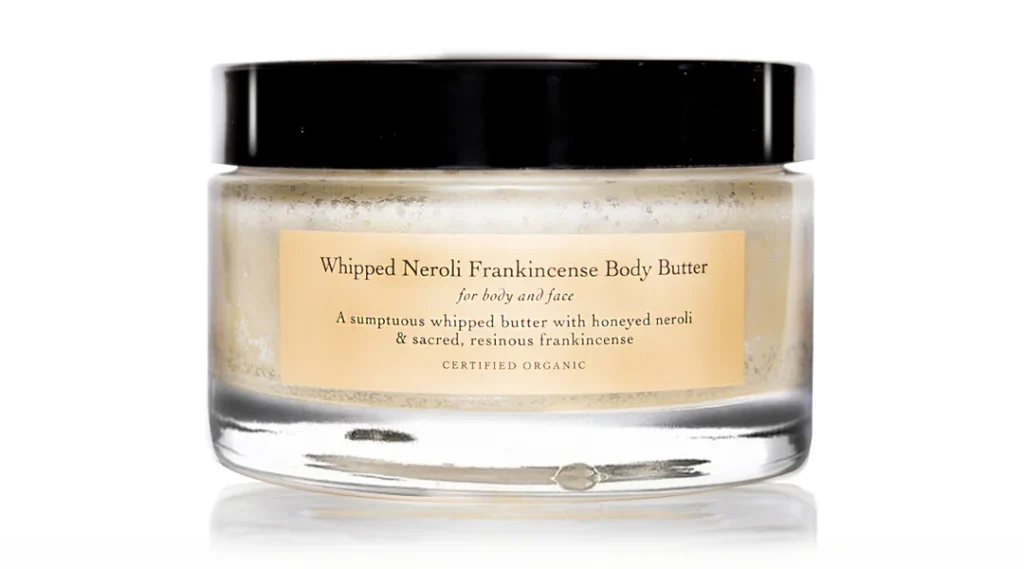
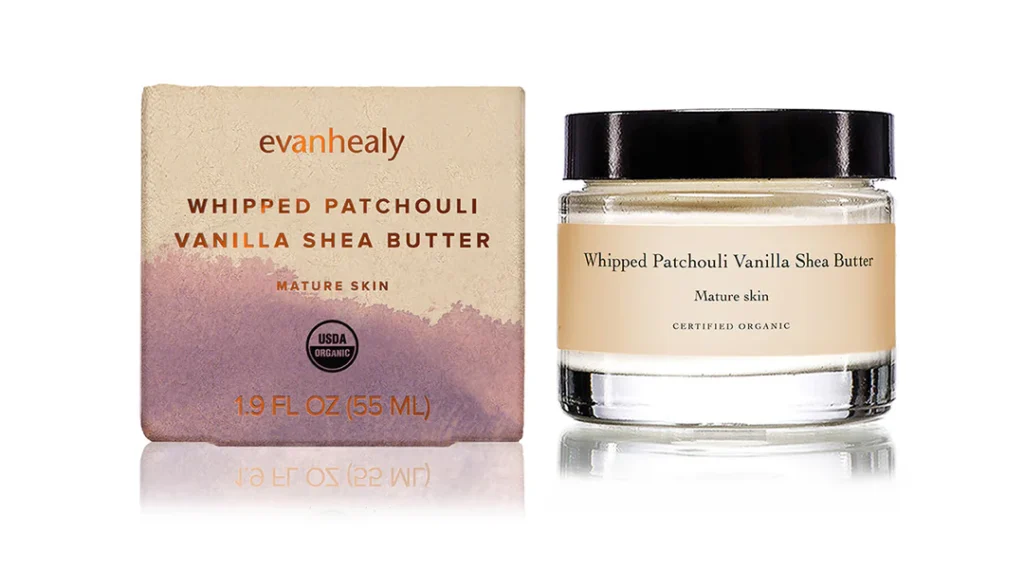
1. Evanhealy Body Butters
This is my go-to for everyday hand moisture. The texture is everything you want in a hand cream. It’s creamy and light, and my hands feel genuinely smooth and nourished after application.
The ingredient list is refreshingly short and pronounceable. You’ll find organic shea butter, organic coconut oil, and organic olive oil doing the heavy lifting, with tocopherol (vitamin E) as the only preservative. No water, no fillers, no questionable chemicals.
In addition to meeting organic standards, Evanhealy is also working toward regenerative agriculture certification, a movement I am very much passionate about! When choosing clean products, I also like to look for brands whose ethics extend beyond ingredients, and Evanhealy is one of those such brands! Since 1999, they have partnered with women’s cooperatives, family farms, and land‑stewarding communities, making it known that “soil is not only the foundation of our culture and civilization but also of our health.” Love!
Evanhealy offers several subtle scent options using only essential oils. My current body butter is the Whipped Moroccan Argan Butter which has a soft, light, slightly citrus scent. I love how uplifting it is everytime I apply it throughout the day! I think my favorite scent so far, however, is the Whipped Blue Cactus Body Butter. That one is a unique scent experience that is beautifully bright, sweet, and rounded but hard to explain. You’ll have to smell it yourself to know what I mean!
I also have to mention that I love how their butters all come in glass jars, so no worries about plastic leaching!
Ingredients (example): Butyrospermum parkii (Shea) Butter, Sesamum indicum (Sesame) Seed Oil, Helianthus annuus (Sunflower) Seed Oil, Argania spinosa (Argan) Kernel Oil, Hippophae rhamnoides (Sea Buckthorn) Fruit Oil, (Lavender) Lavandula angustifolia Flower Oil, Cananga odorata (Ylang Ylang) Flower Oil, Citrus sinensis (Sweet Orange) Peel Oil*, Tocopherol (Vitamin E). *ORGANIC
Certifications/Sourcing: USDA Organic, Oregon Tilth, regenerative agriculture
Best for: Daily hand moisturizing, especially if you wash your hands frequently and need something that absorbs quickly between tasks; those seeking regeneratively-sourced ingredients; if you love more earthy yet vibrant “ritualistic” scents




2. Primally Pure Body Butters
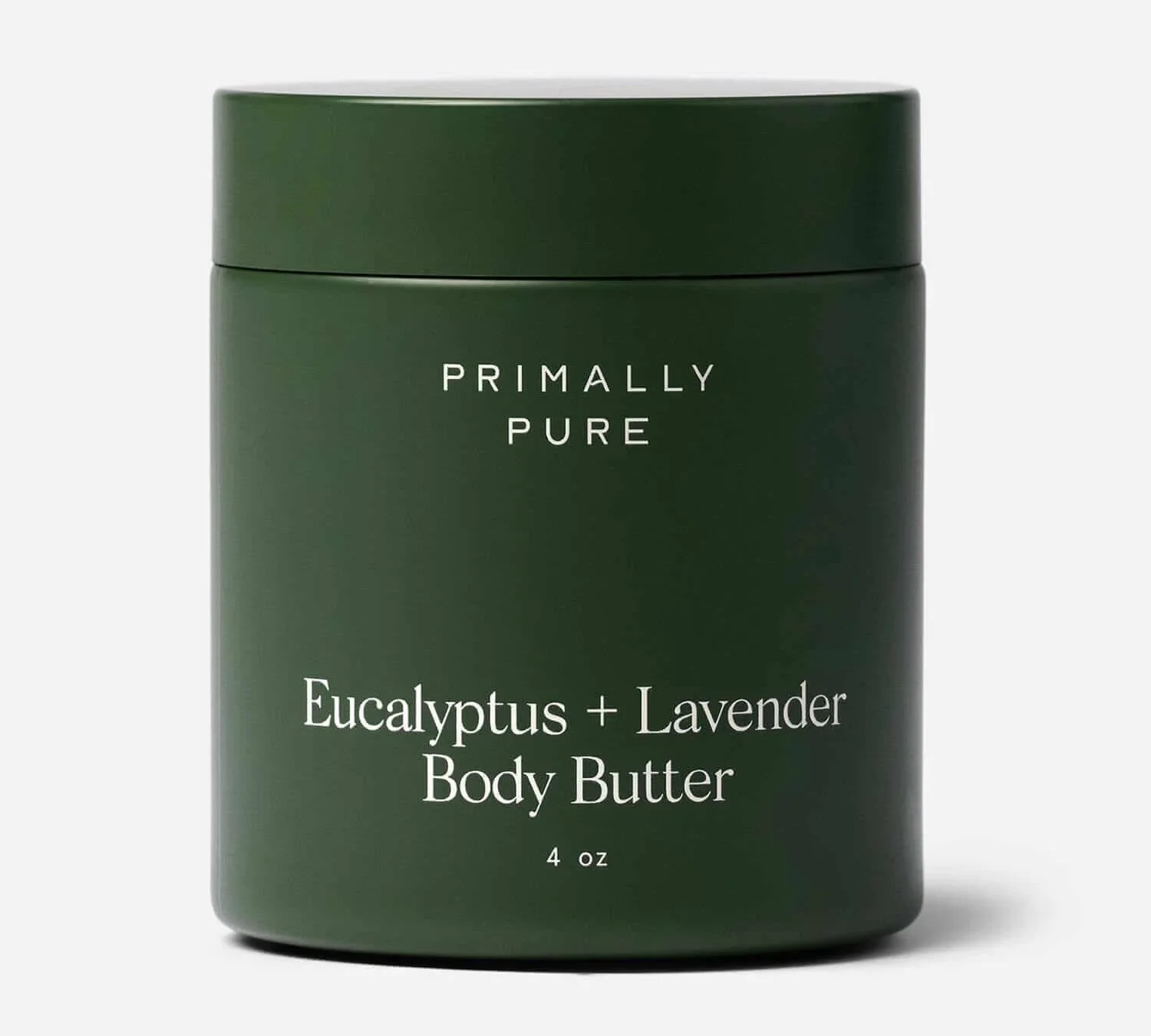
This is where natural luxury meets serious nourishment. And honestly, it’s become such a bright spot in my own daily self-care routine! The texture is exactly what you want in a hand cream: creamy enough to spread easily but light enough that your hands don’t feel weighed down after applying.
The star ingredient is skin-nourishing grass-fed and grass-finished tallow. I know there is some “controversy” about this ingredient, but it works so beautifully with the skin on our bodies because it contains anti-inflammatory CLA, antimicrobial palmitoleic acid, and protective oleic acid. What I also really love about Primally Pure is their commitment to regenerative agriculture. They’re even building their own certified organic regenerative farm, which speaks volumes about their dedication to doing things right! These types of environmental ethics in addition to their commitment to clean products really light me up!
I currently have the Eucalyptus + Lavender body butter, and it truly transforms hand care into a little spa moment. The essential oil blend is definitely noticeable but not overwhelming if you spread it well. A tiny amount goes such a long way! Every time I smooth it on, it honestly feels like 30 seconds of luxury between may own day-to-day rush of dishes and diaper changes.
If you’re wondering about the scent of tallow, let me assure you I didn’t even think twice about any kind of tallow scent when I applied it. In fact, whenever I apply the Eucalyptus + Lavender, the smell seems to melt into this smooth and sweet buttery scent with soft floral hints. It’s seriously a delightful experience every time!
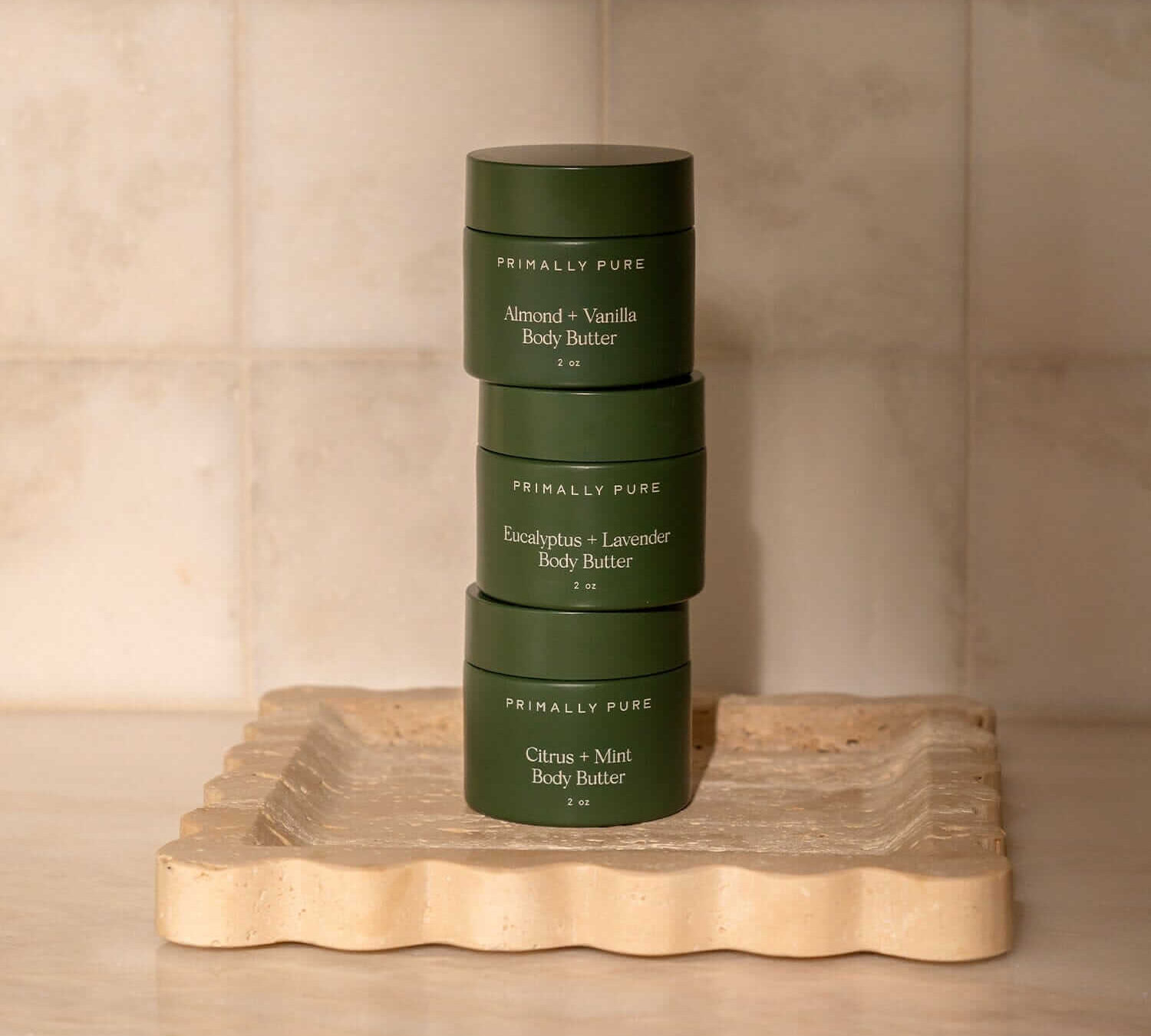
If you’re trying them out for the first time, they have a body butter trio if you want to try different scents… though I’ll warn you, it tends to sell out fast (it was sold out when I tried to last buy it!).
Ingredients (example): Organic Tallow from Grass-Fed Cows, Organic and Fair Trade Coconut Oil, Organic Mango Butter, Organic Shea Butter, Organic Olive Oil, Organic Sweet Almond Oil, Organic Arrowroot Powder, Unrefined Beeswax, Essential Oils of Organic Eucalyptus and Organic Lavender, Organic Rosemary Extract, Non-GMO Vitamin E
Certifications/Sourcing: Organic ingredients, regenerative agriculture, EWG Skin Deep approved
Best for: Anyone who wants their hand cream to feel like a mini aromatherapy session, those seeking regeneratively-sourced ingredients, or if you’re someone who believes everyday moments deserve a little something special.
Use code PRESENTPURE for a 10% discount on Primally Pure body butters!


3. Dr. Bronner’s Unscented Organic Magic Balm for Hands, Face & Body
When the backs of my hands get those rough, extra dry patches (you know the ones), this is what I reach for. It’s definitely more of a balm than a cream (thicker and more concentrated) which makes it perfect for targeted treatment rather than all-over application.
The formula is pure simplicity: organic coconut oil, organic beeswax, organic hemp seed oil, and organic jojoba oil, preserved with tocopherol. That’s it. The beeswax gives it that protective, almost waxy texture that really locks in moisture where you need it most. While it takes a moment to work in, the payoff is worth it—those stubborn dry spots actually heal rather than just temporarily feeling better. This is also my go-to for soothing dry patches on my infant’s face.
Dr. Bronner’s packaging is also a win, as it’s also not plastic!
Ingredients: Persea Gratissima (Avocado) Oil, Simmondsia Chinensis (Jojoba) Seed Oil, Cera Alba (Beeswax), Cocos Nucifera (Coconut) Oil,’ Olea Europea (Olive) Fruit Oil, + Cannabis Sativa (Hemp) Seed Oil, Tocopherol *CERTIFIED ORGANIC INGREDIENTS ICERTIFIED FAIR TRADE INGREDIENTS
Certifications/Sourcing: USDA Organic, Certified B Corporation, Leaping Bunny Certified, Non-GMO Project Verified, Climate Pledge Friendly (Amazon)
Best for: Spot-treating very dry areas, overnight hand treatment, or anyone dealing with cracked or compromised skin that needs serious moisture barrier support.

Why These Popular Products Didn’t Make My Non-toxic Hand Creams List
To help you become a savvier label reader, I wanted to share why some well-known hand creams don’t meet my non-toxic standards. These are brands you’ll see everywhere, from department stores to high-end boutiques. And they may even market themselves as clean brands (which may be true for some of their products but not necessarily all of them).
A closer look at the ingredients reveals why I’d leave these hands creams on the shelf.
1. Biossance Squalane + Omega Repair Hand Cream
Ingredients: Water, Glycerin, Caprylic/Capric Triglyceride, Squalane, Butyrospermum Parkii (Shea) Butter, Sorbitan Olivate, Cetearyl Olivate, Cetearyl Alcohol, Jojoba Esters, Cetyl Palmitate, Ceramide NP, Euterpe Oleracea Sterols, Tocpherol, Linoleic Acid, Oleic Acid, Linolenic Acid, Ethylhexylglycerin, Carbomer, Phenoxyethanol, Sodium Gluconate, Sodium Hydroxide, Sorbitan Palmitate.
For a bit, I really loved using Biossance Squalane + Omega Repair Hand Cream. It was smooth and silky, applied easily, and the smell was nice and neutral. However, it has two ingredients of moderate concern (m) and one of low concern (l):
- Phenoxyethanol (m)
- Carbomer (m)
- Sodium hydroxide (l)
Although these ingredients aren’t on the big offenders list, they are still not the greatest. Additionally, I found that the Evanhealy and Primally Pure butters did a better job keeping my hands moisturized longer, despite all the handwashing!
Ultimately, it just makes more sense to choose the hand cream that both works better and has better, less toxic ingredients. Choosing my non-toxic favorites over Biossance hand cream was a no-brainer for me!
2. CeraVe Therapeutic Hand Cream
Ingredients: Water, Cyclopentasiloxane, Aluminum/magnesium Hydroxide Stearate, Cyclohexasiloxane, Niacinamide, Sodium Chloride, Polyglyceryl-4 Isostearate, Cetyl Peg/ppg-10/1 Dimethicone, Hexyl Laurate, Phenoxyethanol, Ceramide Np, Ceramide Ap, Ceramide Eop, Carbomer, Methylparaben, Sodium Lauroyl Lactylate, Cholesterol, Propylparaben, Hydrolyzed Hyaluronic Acid, Phytosphingosine, Xanthan Gum, Pentaerythrityl Tetra-di-t-butyl Hydroxyhydrocinnamate
CeraVe has quite a list of problematic ingredients that are of either strong (s) or moderate concern (m):
- Methylparaben (s)
- Propylparaben (s)
- Cyclopentasiloxane (m)
- Cyclohexasiloxane (m)
- Carbomer (m)
- Phenoxyethanol (m)
As you can see, this CeraVe product has multiple parabens (methylparaben and propylparaben) which is one of the big offenders you want to avoid on ingredient lists.
3. 100% Pure Hand Buttercream
I used to use 100% Pure Hand Buttercream, and honestly, I wouldn’t say it’s the worst option out there. However, if you read the section above in this article about Japanese Honeysuckle, you know why I chose to find an alternative. This is of course a personal decision you can make concerning this ingredient. As long as you know the facts and can make an empowered and informed decision,
Ingredients (Coconut Version): Theobroma Cacao Seed (Cocoa) Butter, Persea Gratissima Oil (Avocado Butter), Butyrospermum Parkii (Shea Butter), Argania Spinosa Kernel (Argan) Oil, Rosa Canina (Rosehip) Seed Oil, Aloe Barbadensis (Organic Aloe Vera)* Leaf Juice, Euphorbia Cerifera (Candelilla) Wax, Tocopherol (Vitamin E), Extracts of Euterpe Oleracea (Acai Berry) Fruit, Resveratrol, Camellia Sinensis (Green Tea) Leaf, Garcinia Mangosteen (Mangosteen) Peel, Lycium Barbarum (Goji Berry) Fruit, Aristotelia Chilensis (Maqui Berry), Sambucus Canadensis (Elderberry) and Vitis Vinifera (Muscadine Grape) Skin, Extract of Lonicera Caprifolium Flower, Lonicera Japonica (Honeysuckle) Flower, Rosmarinus Officinalis (Rosemary) Leaf, Origanum Vulgare (Oregano) Leaf, Thymus Vulgaris Flower/Leaf (Thyme), Ethyl Alcohol (Grain Alcohol), Cocos (Coconut Flavor) Nucifera Extract * Certified Organic
In a nutshell, here is the ingredient I try to avoid:
- Lonicera Japonica (Honeysuckle) Flower
4. L’Occitane Shea Butter Hand Cream
At nearly $30 a tube, you’d expect L’Occitane’s famous hand cream to have pristine ingredients. But keep reading, and you’ll find some ingredients that make me second guess it.
Ingredients: Aqua/water, Butyrospermum parkii (shea) butter, Glycerin, Coco-caprylate/caprate, Cetearyl alcohol, Glyceryl stearate, Brassica campestris (rapeseed) sterols, Argania spinosa kernel oil, Cocos nucifera (coconut) oil, Helianthus annuus (sunflower) seed oil, Peg-100 stearate, Hydroxyethyl acrylate/sodium acryloyldimethyl taurate copolymer, Ceteareth-33, Caprylyl glycol, Ethylhexylglycerin, Sorbitan isostearate, Polysorbate 60, Pentylene glycol, Beta-glucan, Tocopherol, Parfum/fragrance, Linalool, Coumarin, Citronellol, Alpha-isomethyl ionone, Limonene, Geraniol
While this hand cream does contain quality shea butter and beneficial oils, two problematic ingredients make this a pass for me:
- PEG-100 stearate
- Parfum/fragrance
5. Aēsop Reverence Aromatique Hand Balm
Aēsop has a devoted following for their sophisticated scents and botanical formulations. While this hand balm does deliver on the aromatic experience with bergamot, vetiver, and bitter orange oils, the inclusion of two ingredients makes me question their commitment to clean beauty.
Intgredients: Water (Aqua), Glycerin, Prunus Amygdalus Dulcis (Sweet Almond) Oil, Stearic Acid, Cetearyl Alcohol, Ceteareth-20, Cocos Nucifera (Coconut) Oil, Macadamia Ternifolia Seed Oil, Citrus Aurantium Bergamia (Bergamot) Fruit Oil, Glyceryl Stearate, PEG-100 Stearate, Phenoxyethanol, Tocopherol, Butyrospermum Parkii (Shea Butter), Theobroma Cacao (Cocoa) Seed Butter, Potassium Lactate, Citrus Aurantium Amara (Bitter Orange) Oil, Vetiveria, Zizanoides Root Oil, Triticum Vulgare (Wheat) Germ Oil, Glycine Soja (Soybean) Oil, Lactic Acid, Citrus Grandis (Grapefruit) Peel Oil, Fusanus Spicatus Wood Oil, Disodium EDTA, Benzoic Acid, Dehydroacetic Acid, Ethylhexylglycerin, Aloe Barbadensis Leaf Juice, Daucus Carota Sativa (Carrot) Root Extract, Beta-Carotene, d-Limonene, Linalool, Farnesol, Citral. Contains nut derivatives.
This is why I would not choose this hand cream:
- PEG-100 stearate
- Phenoxyethanol
Making the Switch to Non-Toxic Hand Cream: Your Next Steps
Navigating the world of skincare can feel overwhelming, and hand creams are no exception! The ingredients lists for a single product alone can be challenging enough to try and figure out. But starting with a good non-toxic hand cream or body lotion is a great first step toward making healthier skincare choices for yourself. Since these products set on your skin for long periods of time and are often applied many times throughout the day (particularly hand creams), it is especially important to make sure your skin isn’t exposed to harmful toxins in these products!

Whether you choose one of my recommended non-toxic hand creams or find your own clean favorite using my ingredient label-reading tips from this article as a guide, every application is a small act of self-care that adds up to real, long-term benefits for your health.
Give yourself a hand (I know… cheesy pun definitely intended here) for taking that big next step in your own personal wellness journey!
Sources
Aldegunde-Louzao, N., Lolo-Aira, M., & Herrero-Latorre, C. (2024b). Phthalate esters in different types of cosmetic products: A Five-Year Quality Control Survey. Molecules, 29(20), 4823. Link
Dodson, R. E., Franklin, E. T., Zota, A. R., Jameson, R. L., Flint, J. R., Edwards, L., Weaver, E. B., & Shamasunder, B. (2025). Formaldehyde and formaldehyde releasing preservatives in personal care products used by Black women and Latinas. Environmental Science & Technology Letters. https://doi.org/10.1021/acs.estlett.5c00242
Formaldehyde and Formaldehyde-Releasing Preservatives. (2022, April 26). Safe Cosmetics. Retrieved October 3, 2025, from Link
Grindler, N. M., Vanderlinden, L., Karthikraj, R., Kannan, K., Teal, S., Polotsky, A. J., Powell, T. L., Yang, I. V., & Jansson, T. (2018). Exposure to phthalate, an endocrine disrupting chemical, alters the first trimester placental methylome and transcriptome in women. Scientific Reports, 8(1). https://doi.org/10.1038/s41598-018-24505-w
Hlisníková, H., Petrovičová, I., Kolena, B., Šidlovská, M., & Sirotkin, A. (2020). Effects and Mechanisms of phthalates’ Action on Reproductive processes and Reproductive Health: a literature review. International Journal of Environmental Research and Public Health, 17(18), 6811. https://doi.org/10.3390/ijerph17186811
Jang, H., Shin, C. Y., & Kim, K. (2015). Safety evaluation of polyethylene glycol (PEG) compounds for cosmetic use. Toxicological Research, 31(2), 105–136. https://doi.org/10.5487/tr.2015.31.2.105
Kamrani, P., Hedrick, J., Marks, J. G., & Zaenglein, A. L. (2023). Petroleum jelly: A comprehensive review of its history, uses, and safety. Journal of the American Academy of Dermatology, 90(4), 807–813. https://doi.org/10.1016/j.jaad.2023.06.010
Kim, J., Park, Y., Lee, S., Park, E., & Lee, H. (2023b). Comparative study on estrogen receptor alpha dimerization and transcriptional activity of parabens. Toxicological Research, 40(1), 153–161. https://doi.org/10.1007/s43188-023-00212-1
Known and probable human carcinogens. (n.d.). American Cancer Society. Retrieved October 3, 2025, from https://www.cancer.org/cancer/risk-prevention/understanding-cancer-risk/known-and-probable-human-carcinogens.html
Lachenmeier, D. W. (2008). Safety evaluation of topical applications of ethanol on the skin and inside the oral cavity. Journal of Occupational Medicine and Toxicology, 3(1), 26.
Land, K. L., Ghuneim, S. M., Williams, B. A., & Hannon, P. R. (2024). Phthalates Disrupt Female Reproductive Health: A Call for Enhanced Investigation into Mixtures. Reproduction. https://doi.org/10.1530/rep-24-0117
Malinauskiene, L., Blaziene, A., Chomiciene, A., & Isaksson, M. (2015). Formaldehyde may be found in cosmetic products even when unlabelled. Open Medicine, 10(1). https://doi.org/10.1515/med-2015-0047
Mariana, M., Castelo-Branco, M., Soares, A. M., & Cairrao, E. (2023). Phthalates’ exposure leads to an increasing concern on cardiovascular health. Journal of hazardous materials, 457, 131680.
Pastor-Nieto, M., & Gatica-Ortega, M. (2021). Ubiquity, hazardous effects, and risk assessment of fragrances in consumer products. Current Treatment Options in Allergy, 8(1), 21–41. https://doi.org/10.1007/s40521-020-00275-7
Patel, V., & Gaurav, V. (2025). Role of polyethylene glycol in dermatology. Indian Dermatology Online Journal, 16(2), 227–234. https://doi.org/10.4103/idoj.idoj_648_24
Pažoureková, S., Hojerová, J., Klimová, Z., & Lucová, M. (2013). Dermal absorption and hydrolysis of methylparaben in different vehicles through intact and damaged skin: Using a pig-ear model in vitro. Food and Chemical Toxicology, 59, 754–765. https://doi.org/10.1016/j.fct.2013.07.025
Petrolatum, Petroleum Jelly. (2022, April 22). Safe Cosmetics. Retrieved October 3, 2025, from Link
Phthalates in cosmetics. (2022, May 19). U.S. Food And Drug Administration. Retrieved October 3, 2025, from https://www.fda.gov/cosmetics/cosmetic-ingredients/phthalates-cosmetics
Ross, R. (2019, February 26). What are parabens? Live Science. https://www.livescience.com/64862-what-are-parabens.html
Tang, Z., & Du, Q. (2024). Mechanism of action of preservatives in cosmetics. Deleted Journal, 100054. https://doi.org/10.1016/j.jdsct.2024.100054
Wang, J., Zhao, C., Feng, J., Sun, P., Zhang, Y., Han, A., Zhang, Y., & Ma, H. (2024). Advances in understanding the reproductive toxicity of endocrine-disrupting chemicals in women. Frontiers in cell and developmental biology, 12, 1390247.
Zhou, W. (2019). The determination of 1,4-dioxane in cosmetic products by gas chromatography with tandem mass spectrometry. Journal of Chromatography A, 1607, 460400. Link

0 Comments